Glass for replacement windows
Obscure glass windows and patterned glass
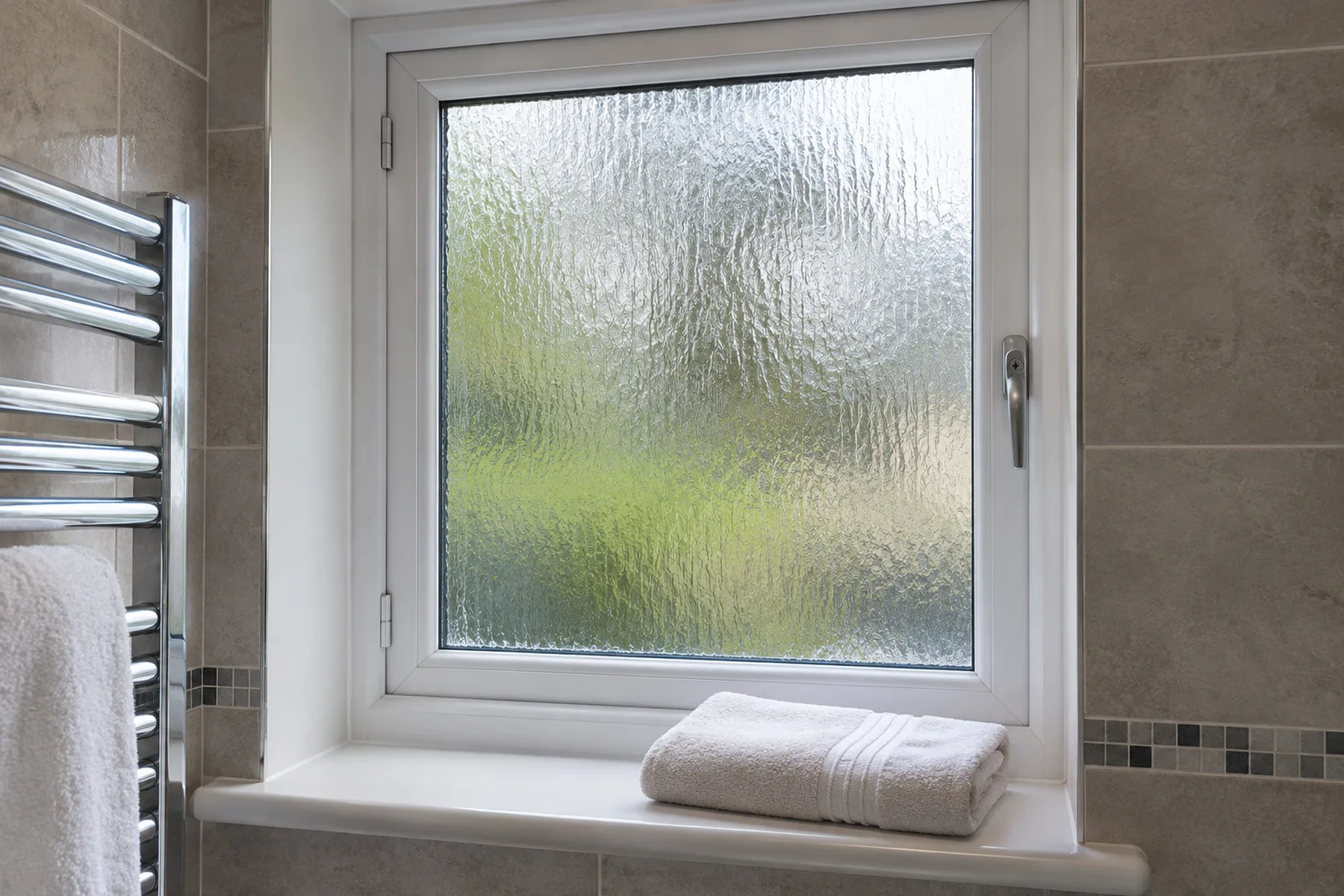
Obscure glass windows let daylight in while hiding what is on the other side, which is why they are the usual choice for bathrooms, toilets and windows that face a neighbour. The glass comes in two main forms, patterned and frosted. The right one depends on how much privacy you want and what the window faces. This page uses Pilkington’s product descriptions to explain the difference.
Patterned and frosted obscure glass windows
Pilkington, a large UK glass maker, describes its Texture range as rolled patterned glass, with a specific pattern or design pressed into one surface, which provides obscuration and decoration. A wired version has a mesh embedded in the glass as it is made. The other main type is acid-etched glass: Pilkington describes its Optifloat Opal as an acid-etched translucent glass that diffuses natural light. Patterned glass hides the view by distorting it. Etched glass hides it by scattering the light.
Pilkington also sells a collection of designs developed to give privacy while letting light through, with varying levels of privacy. Other makers have their own ranges.
Choosing obscure glass windows for privacy
Each maker rates privacy on its own scale, and we have not found a single standard that compares them. So a label such as “level four” means different things in different catalogues. The reliable test is to look at a sample, in the room it is for:
- hold it against the window in daylight and look through it from inside;
- check it from outside as well, with the room light on in the evening, because patterned glass behaves differently at night;
- take the sample to the actual window, since the distance to the neighbouring house changes what you can see.
Patterns can also leave a window looking dim, so allow for that in a small bathroom.
Which way up the pattern goes
Pilkington says its decorative collection is non-directional, apart from one portrait design, so those panes can usually be fitted either way up. Other patterns may not be. Ask the fitter whether your glass has a direction and which face goes outward. Then check that the delivered glass matches the sample.
Safety glass and escape windows
Obscure glass is still glass, so the same rules apply. A window that reaches within 800mm of the floor, as many bathroom windows do, falls under the safety glass rule, and the glass has to be toughened or laminated. Pilkington says that its decorative designs can be toughened or laminated, depending on the application. BS 6262 safety glass explains where the rule applies.
If the window is also a fire escape from a bedroom, the glass should not get in the way of opening it. An escape window needs a clear opening of at least 0.33 m², and the bottom of the opening should be no higher than 1,100mm above the floor, from the Planning Portal’s guidance. Obscure glass in the sash does not change those sizes.
What to put on the quote for obscure glass windows
Ask for the make and pattern name, which panes are obscure, which are also safety glass, and where the pattern faces. See the options for glass in replacement windows, check the quote checker for anything missing, and get free quotes from local fitters.
Get quotes for your home
A guide price only takes you so far. Local firms can price the work on your own home, and comparing a few quotes is the quickest way to see what is reasonable.
Compare free quotes