Glass for replacement windows
BS 6262 safety glass in windows
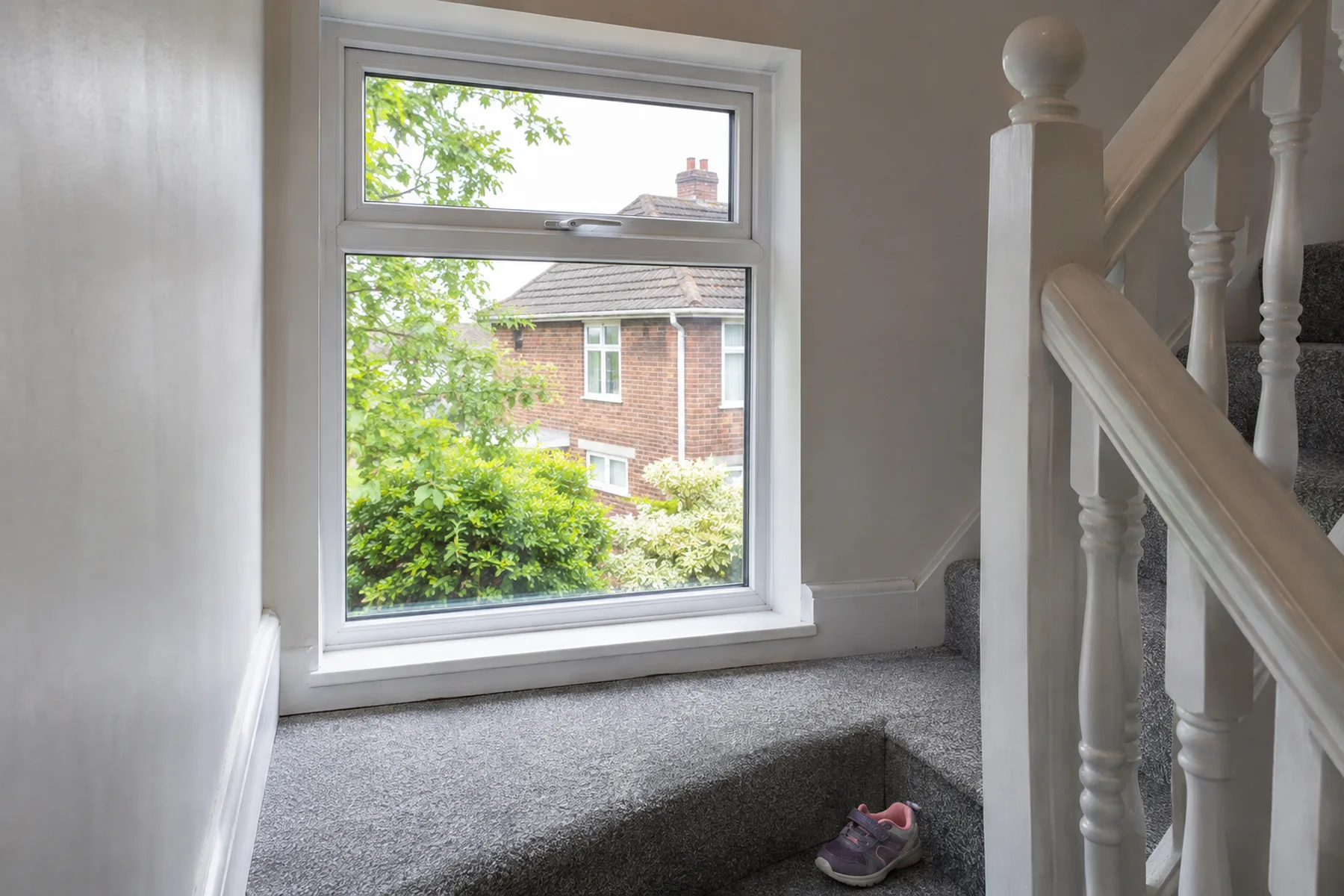
BS 6262 is the British Standard code of practice for glazing in buildings, and its safety part is what people mean when they ask about safety glass in windows. The rule that actually binds you is in the Building Regulations. Approved Document K says that glass in “critical locations”, the places where someone could knock or fall against it, has to be safety glass. Your fitter has to meet that rule on every job.
We could not read BS 6262 itself, because the British Standards Institution sells it. What follows comes from Approved Document K, which is free to read and which the regulations point you to.
Where BS 6262 safety glass is needed
Approved Document K marks the critical locations in a diagram of walls, doors and side panels:
- glass in a window up to 800mm above the floor;
- glass in a door or a door side panel up to 1,500mm above the floor;
- side panels within 300mm of the edge of a door.
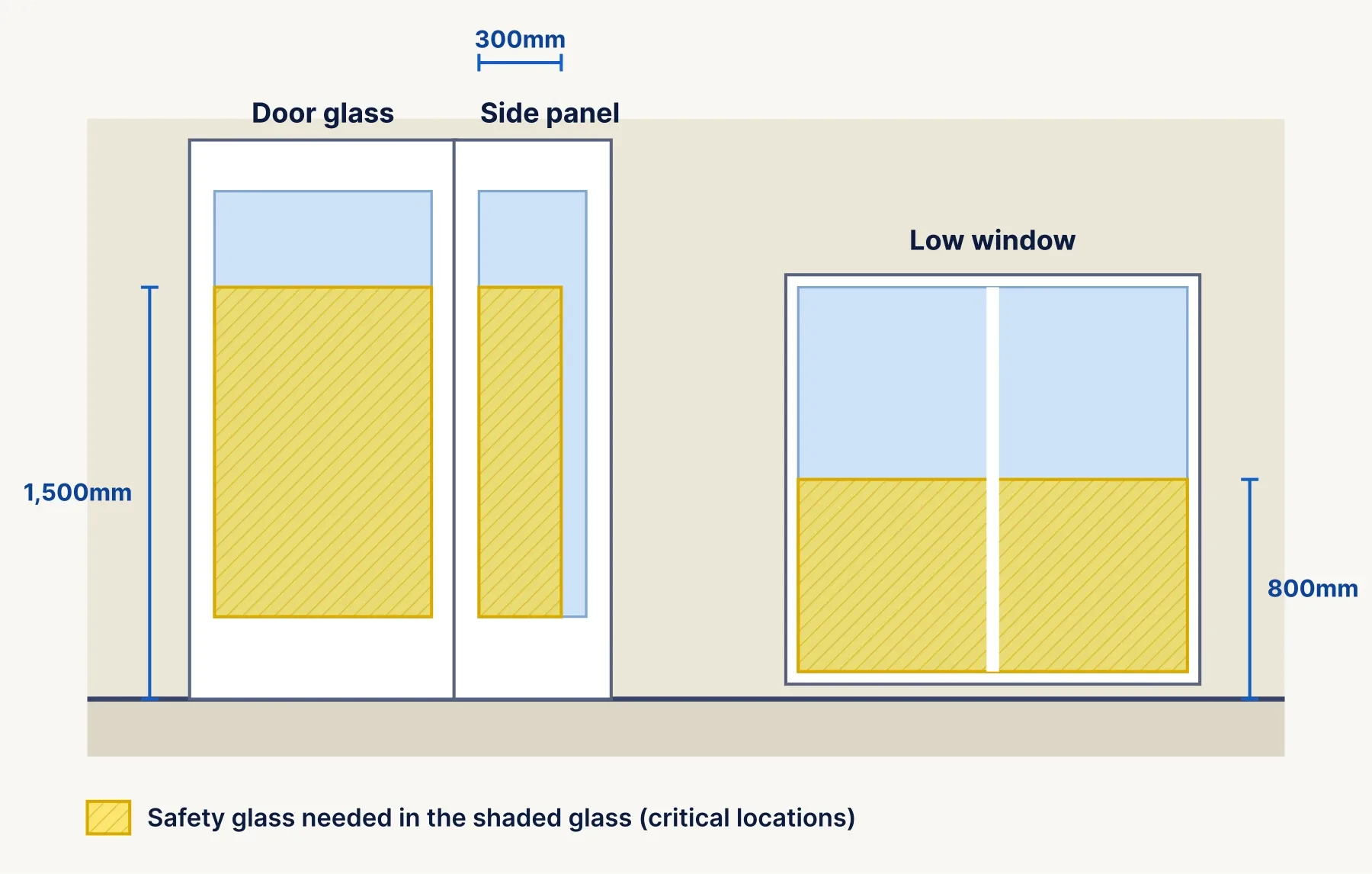
So a low window in a stair or landing, the glass in a front or French door, and the narrow panel beside a front door are all covered. A window above those heights is not, although a fitter may still choose safety glass for a large pane.
What counts as safety glass
The document defines safe breakage by what happens when the glass is hit. A pane is safe if it breaks into a small clear opening, into small harmless particles, or into pieces that are not sharp or pointed. Toughened glass is the usual example of the second, and laminated glass, which holds together on a plastic layer, usually the third.
For a critical location, the glass has to reach Class 3 of BS EN 12600 or Class C of BS 6206. Where a door pane is wider than 900mm, a lower class is accepted: Class 2 of BS EN 12600 or Class B of BS 6206. Those standards are the ones the document names, so they are what a fitter should quote you.
Approved Document N and BS 6262 today
Older guidance often refers to Approved Document N, which covered glazing. That document no longer stands alone: the current edition of Approved Document K combined the guidance on glazing into K. If a leaflet still cites Document N, it is out of date, and the figures above are the current ones.
How to check your windows
Toughened and laminated panes are normally marked in a corner with the standard they meet, but marks can be hard to see once a window is fitted. It is easier to ask for the answer in writing before you order. Ask the fitter to list, window by window, which panes are safety glass, and to say which standard each one meets. A quote that only says “toughened glass where required” tells you nothing you can check.
If a replacement window falls in a critical location and the fitter did not mention safety glass, ask why before you sign. The pane should also be on the paperwork the fitter leaves when the job is done, together with the certificate for the work.
Next steps
Look at the windows near your floors and doors, and note which ones are covered. Then use the quote checker to see what each quote includes, read how glass choices fit together, and get free quotes from fitters who will put the glass in writing. For what the job costs for your home, see replacement windows for a 3-bed semi.
Get quotes for your home
A guide price only takes you so far. Local firms can price the work on your own home, and comparing a few quotes is the quickest way to see what is reasonable.
Compare free quotes